A fatal security misstep can not only spell disaster for an event, but may, in the worst possible scenarios, lead to mass fatalities.
It’s early Spring, 1989, a relatively cool time in the metropolitan hub of Sheffield, England. Along with Spring comes rainy season, and more importantly, the end of the football year.
April 15th: Two juggernauts of football face off in an electric FA Cup Semi-Final match. Will the Liverpool Reds stay true, and hold the top the premier league table, or will Nottingham Forest bring the pressure, and get a chance to snatch the crown for themselves? This is the only question on the minds of the more than 50,000 people gathered at Hillsborough Stadium. (https://www.cnn.com/2016/04/25/world/hillsborough-disaster-fast-facts/index.html)
With such a popular match held at Hillsborough – which rarely sees more than a gathering of die-hard fans – space outside of the stadium is limited. Fans wearing the classic Liverpool red and Nottingham white pour into the stadium, desperate to get to their seats (which rarely feel the kiss of buttox-cheeks), for fear of missing a second of this epic showdown.
In order to relieve a pileup of Liverpool fans rushing into the stadium, event security opens up an exit gate to usher the crowd inside. More than 3,000 fans were funneled into a standing-room-only area with a safe capacity of just 1,600. This is the misstep that led to the deaths of 95 fans, with another 162 hospitalized.

Due to poor communication and sloppy coordination by the event security, officials at first believed the commotion going on to be no more than a clashing of fans and your average tomfoolery, so “police never fully activated the major incident procedure”. Fans strong enough to push through, clamored onto the field in a desperate attempt to get to safety. The Taylor Interm Report describes the scene as: “…truly gruesome. The victims were blue, cyanotic, incontinent; their mouths open, vomiting; their eyes staring. A pile of dead bodies lay and grew outside gate 3. Extending further and further on to the pitch, the injured were laid down and attempts made to revive them.” (https://en.wikisource.org/wiki/The_Hillsborough_Stadium_Disaster_Interim_Report/Part_1)
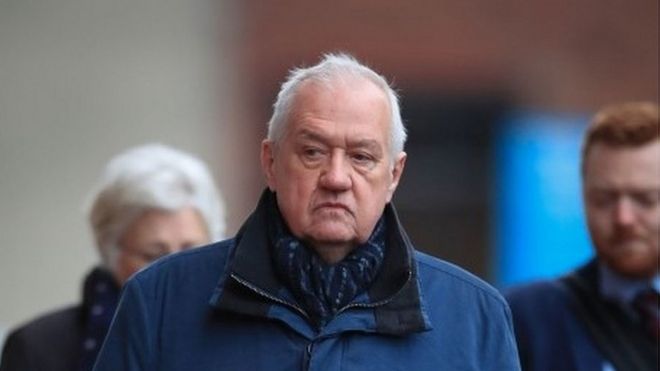
The Hillsborough Disaster has managed to carry on to this day, where just this March, David Duckenfield declared he will not testify in his trial for the gross negligence manslaughter of 95 football fans. (https://www.bbc.com/news/uk-england-merseyside-47555666)
As one of the worst tragedies to ever happen due to gross security negligence, football matches have since learned from their predecessors actions, and have taken it upon themselves to make sure this never happens again. New open-seating models have been created to remove the possibility of bottlenecks, and 3rd party ticket selling became regulated, along with numerous other changes in an effort to prevent fan hooliganism. The Hillsborough Disaster was just that, a disaster, and to this day, resides in the back of every public safety director’s mind.
/arc-anglerfish-arc2-prod-expressandstar-mna.s3.amazonaws.com/public/PCZBDJ5TWZH3TNJMX3OUXPS5LY.jpg)

 Safety at Venues